
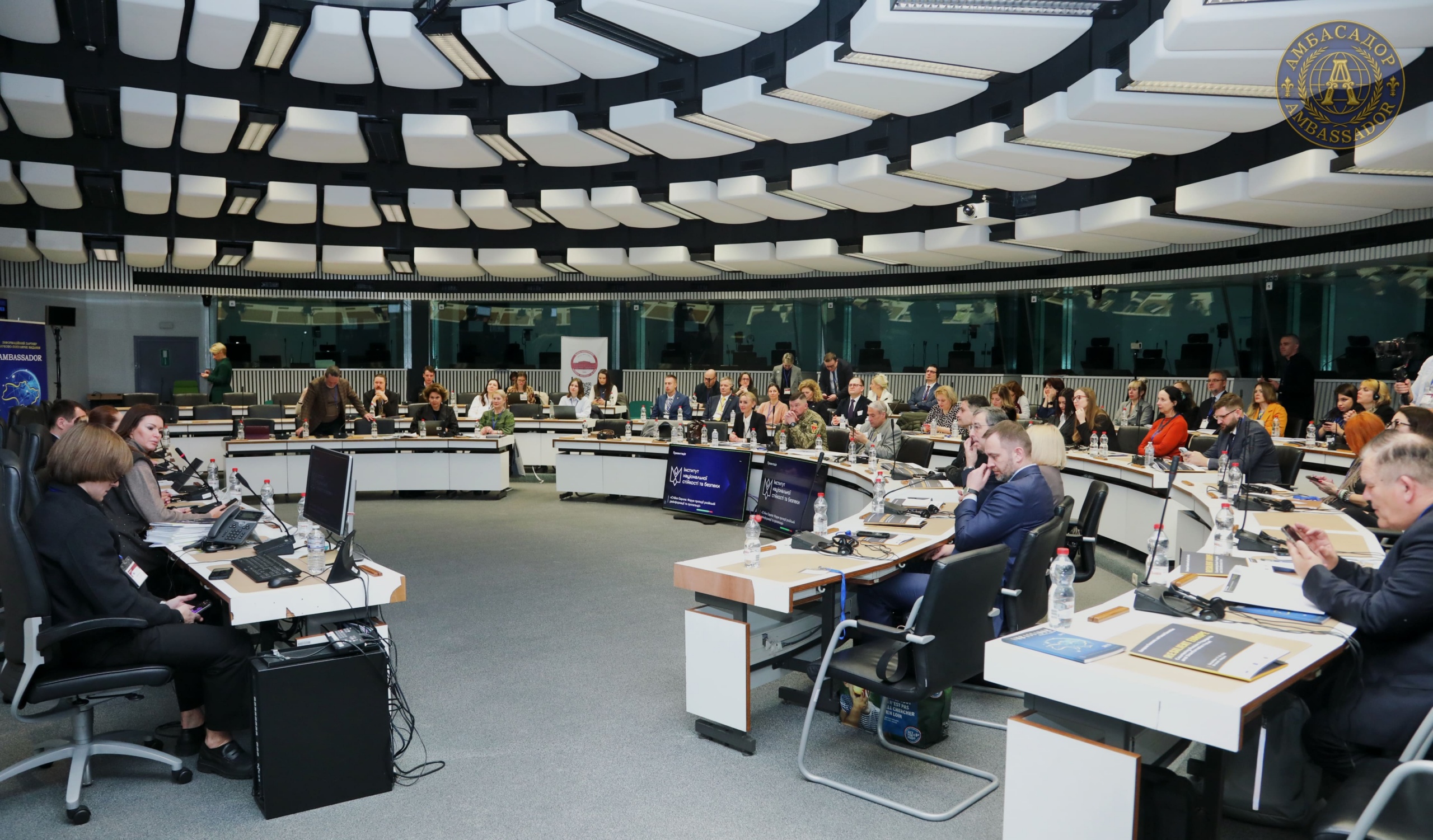
Kateryna Odarchenko, Head of the Institute for Democracy and Development “PolitA”, along with Iryna Kopanytsia, a women’s rights advocate, took part in the high-level international forum Resilient Europe, focused on countering Russian propaganda and disinformation and strengthening Europe’s information and cognitive resilience.
The event was held at the European Parliament in Brussels and brought together European and Ukrainian policymakers, security experts, researchers, civil society leaders, cultural institutions, and diaspora organizations. The forum was co-organized by the Institute for Democracy and Development “PolitA” with the participation of leading Ukrainian research and policy institutions.
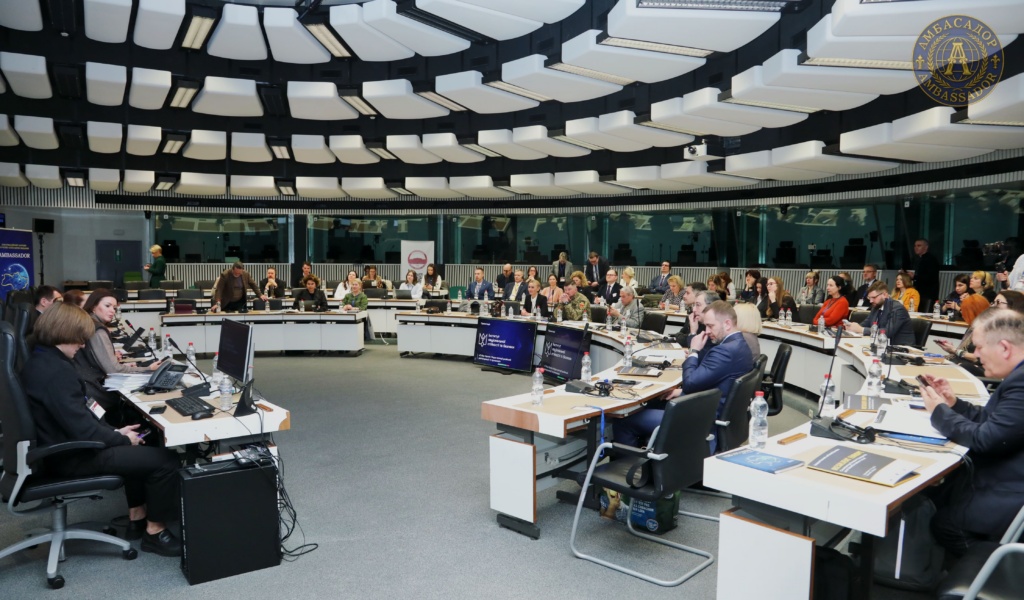
During the discussion, Kateryna Odarchenko emphasized that effective counter-disinformation policies must go beyond media literacy tools alone.
“Disinformation thrives where influence is opaque. Europe must address not only propaganda, but also hidden and unregistered lobbying networks that distort democratic decision-making under the guise of civil society or cultural exchange,” she stated.
Her remarks highlighted Ukraine’s frontline experience with hybrid warfare, stressing that unaddressed information threats gradually evolve into institutional risks that undermine democratic governance and public trust.
Iryna Kopanytsia, women’s rights advocate and international communication specialist, who moderated the forum, delivered a powerful intervention highlighting how disinformation directly enables human rights violations. She underscored that Russia systematically abducts Ukrainian children while simultaneously conducting large-scale disinformation campaigns to obscure these crimes and manipulate international perception.
“Disinformation is not an abstract threat — it creates conditions in which crimes can be hidden, normalized, or denied,” Kopanytsia said. “When Ukrainian children are taken from their families, information warfare becomes a tool to erase responsibility and delay justice.”
“Children in the Russian Federation have become a central instrument of cognitive influence,” she added. “Through forced displacement, re-education, and propaganda narratives, Russia uses children to reshape identity, memory, and loyalty. Countering this requires not only humanitarian response, but strategic information resistance.”
Video with Kateryna’s speech:
The Resilient Europe forum served as a platform to examine how lessons learned from Ukraine’s resistance to hybrid threats can be incorporated into European security, counter-disinformation, and democratic resilience policies.