
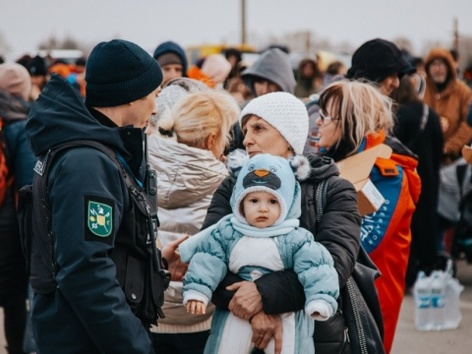
The R.I.W.E. (Refugees International Women Empowerment) Foundation has published a new analytical report titled “Ukrainian Refugees in Bulgaria: Risks of Vulnerability, THB/GBV and Exploitation, Access to Support and Perceptions of 2027 Transition.” The study was prepared with the support of the Institute for Democracy and Development “PolitA” and several international partner organizations.
The report presents the findings of an online survey conducted among 454 Ukrainian refugees living in Bulgaria between 25 November and 03 December 2025. The research examines patterns of vulnerability, labor exploitation, trafficking in human beings (THB), gender-based violence (GBV), online risks, access to services, levels of institutional trust, and perceived risks related to the planned end of the EU Temporary Protection regime in March 2027.
The study was implemented in cooperation with a coalition of organizations working on refugee protection and women’s empowerment, including the European Association of Ukrainian Women, Foundation for Access to Rights (FAR), Dignita Foundation, Animus Association, Fund Good in Bulgaria, Open Heart Foundation, and New Women Connectors.
According to the report, the survey sample consisted predominantly of women (92.3%), most of whom are of working age and living with children or extended family members. Respondents are mainly located along the Black Sea coast — particularly in Varna, Burgas, and Nessebar, while several groups were also reached in Plovdiv through peer-to-peer community sharing. The majority of participants have lived in Bulgaria for more than a year, providing insights based on direct experience with the labor market, social services, and local institutions.
The findings highlight economic pressure as a major driver of vulnerability among Ukrainian refugees. More than 11% of respondents reported receiving unclear or suspicious employment or housing offers, sometimes involving barter arrangements or implied services. Additionally, 24% reported having debts or financial obligations, increasing the risk of unsafe employment conditions, while 29.5% reported unmet medical needs, reflecting combined financial and systemic barriers to healthcare.
The report also indicates that more than one-third of respondents know someone who has experienced serious workplace violations from employers in Bulgaria. Researchers note that such figures likely underestimate the true scale of the problem, as labor exploitation among migrant and refugee communities often remains underreported.
Digital environments also emerged as an area of concern. Nearly one in four respondents (24.2%) reported encountering or knowing someone exposed to suspicious online recruitment, coercive messaging, or “easy money” job offers. Online platforms such as Telegram groups used by Ukrainian communities serve both as important support networks and as unmoderated spaces where illicit recruitment attempts, sexual exploitation risks, and criminal actors may operate.
The report emphasizes the importance of strengthening protection mechanisms, improving access to services, and addressing emerging risks as the EU Temporary Protection framework approaches its expected conclusion in 2027.
The Institute for Democracy and Development “PolitA”, which supported the study, highlights that the findings provide important evidence for policymakers, civil society organizations, and international partners working to protect Ukrainian refugees and prevent exploitation.